
People often use the terms static bonding and static grounding as if they mean the same thing. They do not. There is a very important difference, and you must understand it to be as safe as possible. To comply with OSHA and NFPA requirements, you must know the difference and apply it correctly.
A bonding system connects conductive equipment together to keep it at the same electrical potential. Static sparking will not occur between conductive objects that are at the same potential.
Here are some good examples of bonding:
In each example, you bond together the pieces of equipment that generate static electricity. This brings them to the same electrical potential.

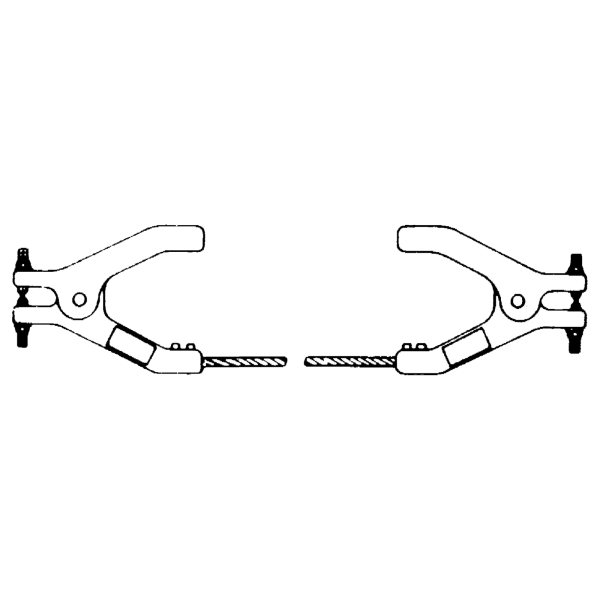
Assemblies such as the LE60HH are often used for this task. The LE60HH is part of our LE60-LE79 Series Fixed-Length Static Grounding Assemblies. It has an REB hand clamp on each end, so it can serve as a convenient, portable way to bond two pieces of equipment together.
A grounding system is a special form of bonding. It connects conductive equipment to earth, to prevent sparking between the conductive equipment and grounded structures.
For example, you ground a drum to the copper bus bar in the room. The bus bar eventually leads to the ground rod and to earth. This brings the electrical potential of the equipment to the potential of the earth, which is neutral.
Think of the earth as having an unlimited amount of electrons and protons to release or absorb. This lets the earth bring any piece of equipment to a neutral electrical potential, if you connect the equipment properly.
Many people believe that bonding techniques alone are sufficient to eliminate the risk of static ignition. As a result, many operators rely only on static bonding methods in the field.
In reality, bonding only makes sure that two objects are at the same electrical potential. Because of this, electricity cannot jump between the two objects. But if the two objects are isolated from ground, they can still hold an electrical potential. This potential could create a spark if a third material (for example, a person) is introduced.
If the mixer was grounded, the drum was also grounded, because it was bonded to the mixer. In that case, the risk of this discharge is much lower.
It is always best to both bond and ground, to make sure that the potential energy is zero.